
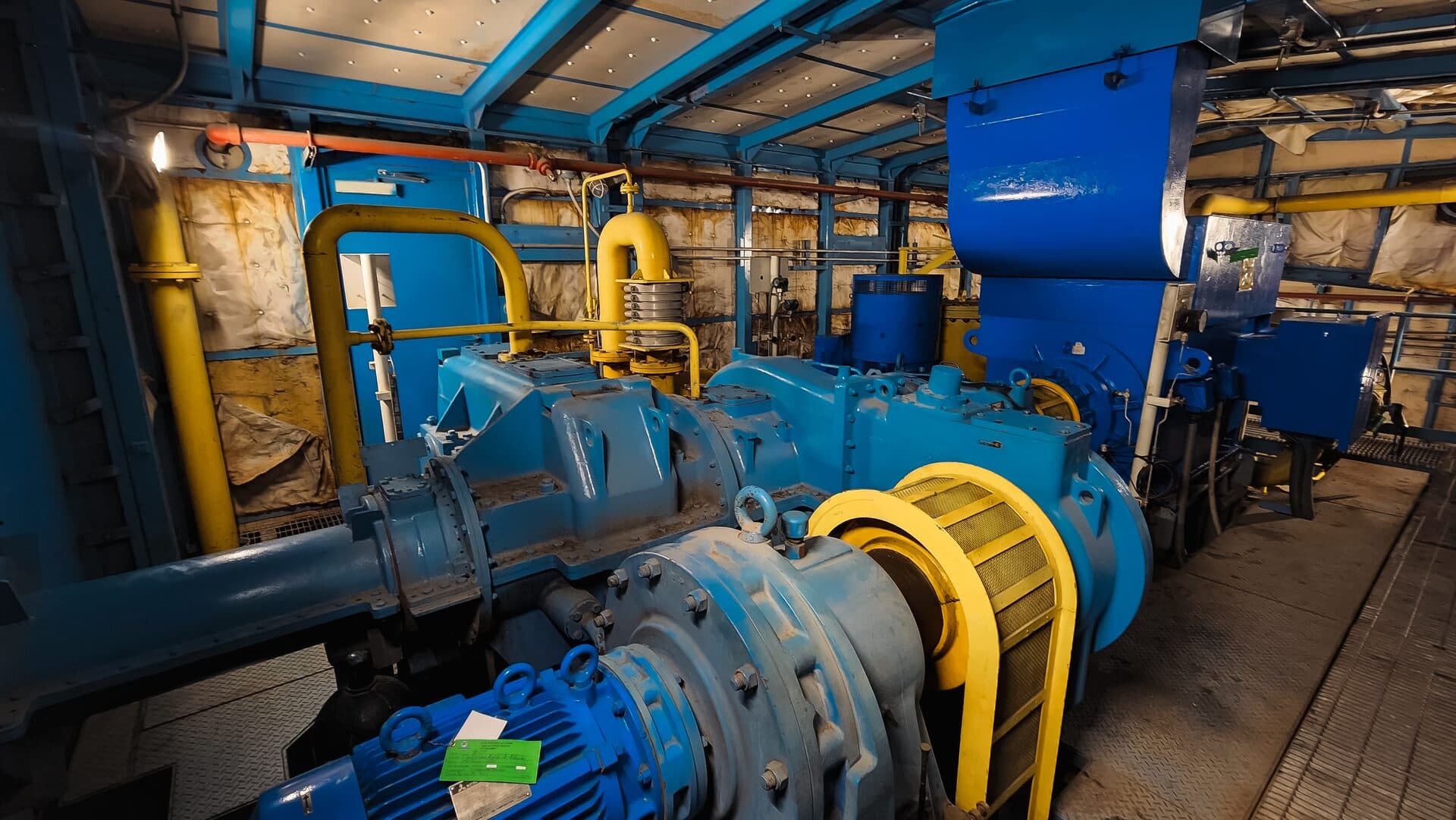
Sector · Mining
Generator Service for Mining Operations
Maintenance, rewind, repair and commissioning of electrical generators in open-pit, underground and remote mining operations — gold, silver, copper and coal. Coordinated priority response under IEEE 115 and IEC 60034.
Open-pit · Underground · Processing plants · Remote sites
IEEE 115IEC 60034Industry challenges
What mining operators are solving today
Mining runs 24/7 with minimal tolerance for downtime. Critical generators — both primary generation and backup — sit in a chain where a single failure stops the entire processing plant.
- 24/7 operation with near-zero tolerance for downtime — every hour of mill outage carries heavy production loss
- Dust, structural vibration and corrosive environments in processing plants
- Generators subject to continuous variable load from grinding mills, conveyors and crushers
- Remote substations and remote sites with complex logistics for mobilization and spares
- Emergency power for critical assets with strict SLAs (hoists, dewatering, ventilation)
- Electrical compliance under local mining regulation and ground-fault protection requirements
Why TEMISA Power Gen
Six differentiators for mining operations
In-shop repair and rewind in our own facility — no overseas turnaround required
Specialists coordinated according to availability and project scope
Documented coverage across high-mining-activity states in northern Mexico
Recovery of generators that other shops discard, with HV testing after repair
traceability for operator audits and corporate compliance
Equipment we serve
Typical equipment in mining operations
Equipment
Synchronous generators (main and standby)
Main generation and standby for mine substations and processing plants. In-shop rewind and in-field overhaul.
See equipmentEquipment
Cogeneration turbogenerators
Cogeneration units coupled to gas or steam turbines for large mining complexes. Major maintenance and rotor balancing.
See equipmentEquipment
Emergency and backup gensets
Critical backup for mine substations, hoists, dewatering pumps and ventilation. Preventive maintenance under NFPA 110 and IEEE 446.
See equipmentKey services
Priority services for mining
Service
Stator and rotor rewind
In-shop rewind of generators. Certified copper, Class F/H insulation, VPI impregnation and post-rewind HV testing.
See serviceService
Predictive maintenance
Thermography, vibration analysis, partial discharge and electrical testing on mine generator fleets.
See serviceService
Coordinated emergency response
Priority response for critical mine outages. Pre-arranged logistics for remote sites and validated access permits.
See serviceService
Electrical testing
Hipot AC/DC, polarization index, power factor and ELCID for stator diagnosis before rewind decision.
See serviceService
Commissioning
HV acceptance testing and grid synchronization under IEEE 115 for new and rehabilitated mine generators.
See serviceStandards applied
Standards we apply to mining work
Every intervention is documented with a signed protocol and full traceability by work-order number with document traceability — aligned with the operator's safety and compliance management system.
- IEEE 115 — Test procedures for synchronous machines
- IEEE Std 95-2002 (recommended practice, inactive-reserved) — DC high-voltage insulation testing of AC machines rated 2300 V and above
- IEEE 43 — Insulation resistance and polarization index
- IEC 60034-1 — Rotating electrical machines: rating and performance
- IEC 60034-27 — Off-line partial discharge measurements
- — Quality management system
- ISO 10816 — Mechanical vibration of rotating machines
Illustrative example
Not a published project record.
Commissioning of an industrial generator at a mining plant
IEEE 115
Reference guide
Release or correct
Decision after acceptance tests
When an industrial generator at a mining plant is commissioned, Hipot, polarization index, power factor and synchronization tests can be run under an IEEE 115 acceptance protocol. If the results meet the agreed criteria, the unit is released with a traceable protocol; if not, the cause is corrected and the affected tests are repeated before release.
FAQ
Frequently asked questions — Mining generator service
Questions we often receive. Can't find yours? Email us at ventas@temisapowergen.mx.
Do you serve mining plants in northern Mexico and remote regions?
Yes. We have documented coverage across high-mining-activity states in northern Mexico, including remote and open-pit sites. Logistics and site-access permits are coordinated at contract start, operating.
Can you rewind large generators from a mining plant?
Yes. Our shop in Tlajomulco rewinds electrical generators. Certified copper, Class F/H insulation, VPI impregnation and post-repair HV testing. No overseas turnaround required.
How do you handle emergencies at a remote mine site?
Priority response coordinated with mine operations with pre-arranged logistics. For remote sites, access permits and work windows are validated at the start of the call. traceability is preserved through emergency interventions.
Do you maintain mine substations and ground-fault systems?
Yes. We service electrical generators in mine substations. The inspection scope includes thermography, vibration analysis, electrical testing and protection review aligned with applicable mining regulations and grounding standards.
Are you OEM-independent for mine generator brands?
Yes. We deliver independent multi-OEM service for generators present in mining operations: Toshiba, GE, Siemens, ABB, Brush, WEG and others. No OEM lock-in — any installed platform is supported.
Contact
Need service for your industrial generator or turbogenerator?
Response and quote timing confirmed after reviewing your request. Emergency support by arrangement across Mexico and Central America.
Quote requests
ventas@temisapowergen.mxDirect line
+52 33 3614 2460Shop hours
Monday to Friday 8:30–17:30 and Saturday 8:30–13:30 (closed Sunday)
Get a quote in 4 steps
Tell us what you need
Our 4-step quote form captures the essentials: service type, equipment, capacity and contact. Response and quote timing depend on the information received and agreed scope.
· IEEE / IEC