
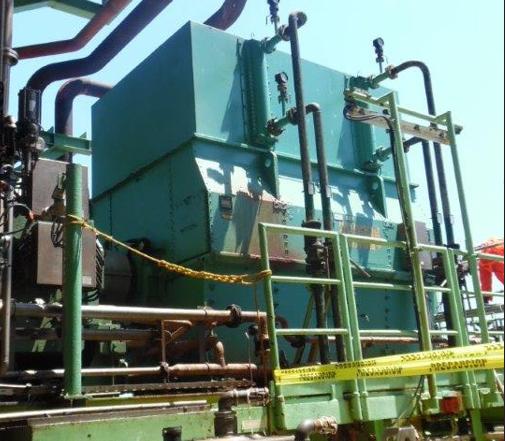
What the field record documents
A 2026 survey of a KATO generator on a platform considered on-site L3 maintenance and rotor removal feasible, subject to additional handling operations and temporary lifting structures. A separate 2026 survey of an ABB generator on a floating unit concluded that rotor removal was not feasible in its current location.
These findings come from feasibility surveys. On their own, they do not establish that L3 maintenance or rotor removal was subsequently performed.
Review the equipment and its surroundings together
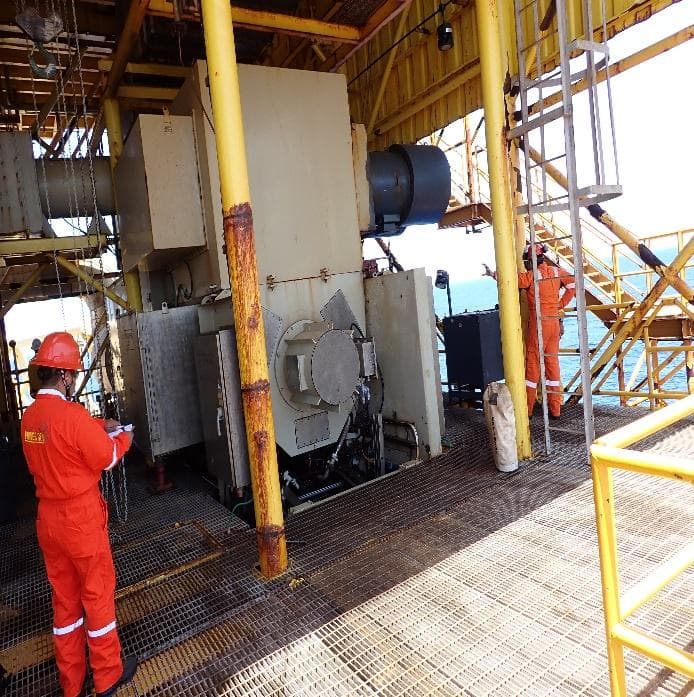
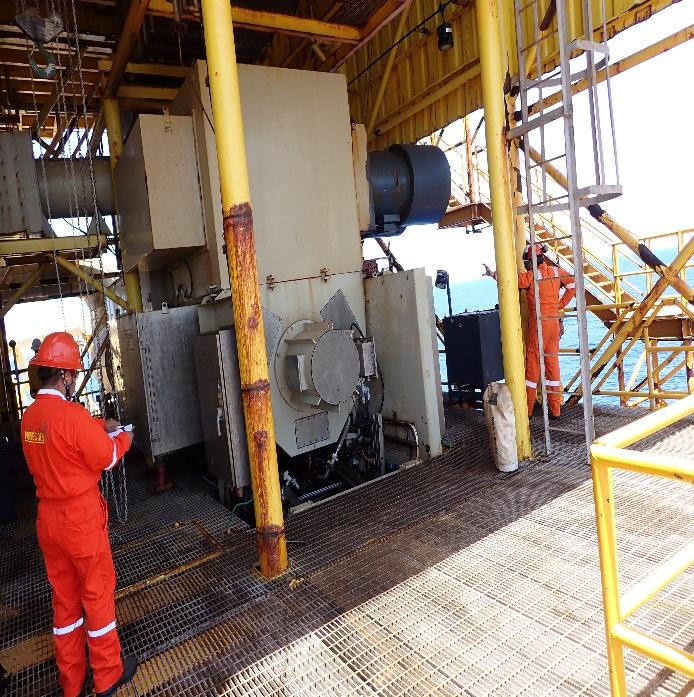
The nameplate identifies the generator, but the scope also depends on obstructions, the enclosure, access routes and available supports. The KATO survey recorded work at height, moisture, oil contamination and corrosion of external components.
A feasible lift still needs a plan
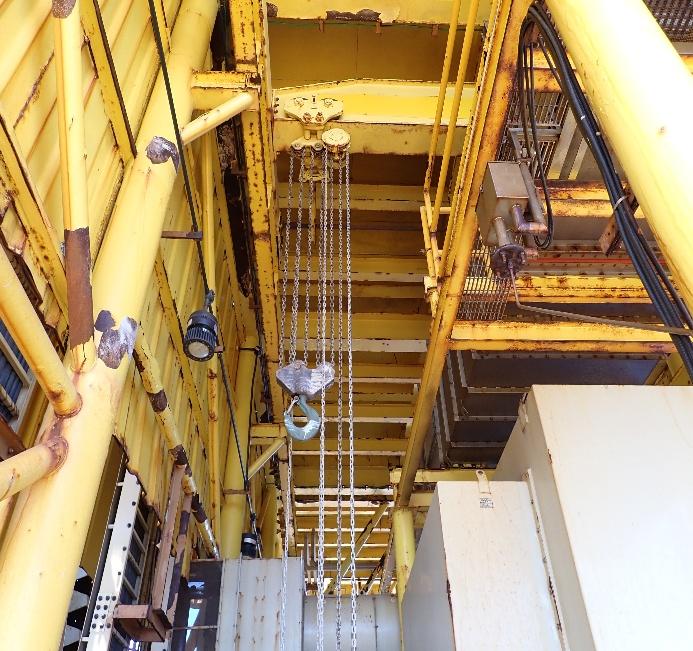
The KATO feasibility assessment called for additional resources to move major components. Those requirements belong in the technical and logistics scope: lifting equipment, temporary supports, permits, auxiliary services and the intervention window.
The restriction determines the alternative
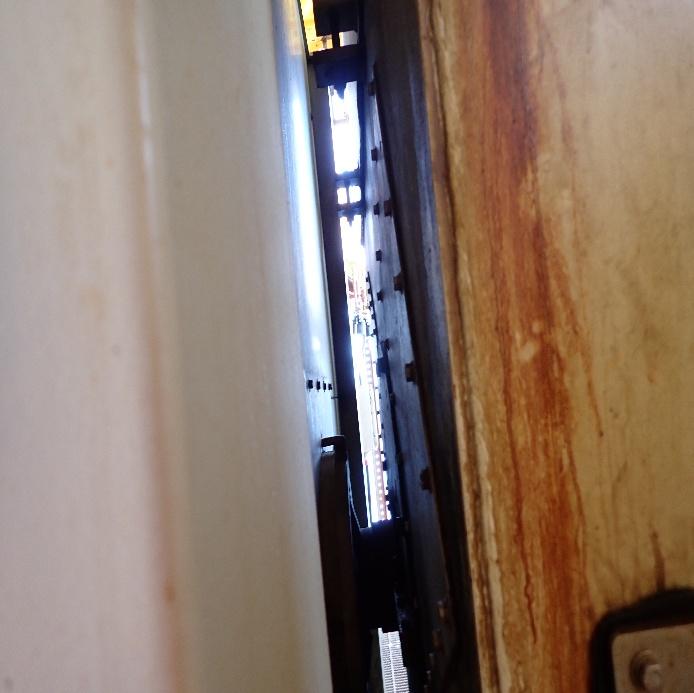
The ABB removal restriction requires distinguishing maintenance that can be performed in its current position from work that needs modified access or component relocation. A feasibility review allows these alternatives to be considered before committing to an outage.
Information to assess your equipment
- Generator nameplate, model and rated power.
- Photographs of the enclosure, access routes and both ends of the equipment.
- Available drawings, clearances and existing lifting equipment.
- Location, auxiliary services, access restrictions and planned outage window.
Start with the information you have. Documents and photographs are coordinated with the technical team during follow-up.